
Tuning Knob Positioning Block
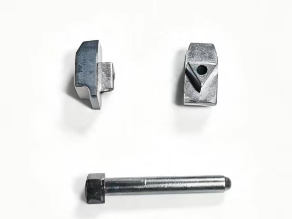
Material: Zinc Alloy Die Casting
Application: Consumer Electronics
Secondary Process: Grinding
Surface Treatment: Baking Paint
Lead Time: 7-10 days
Advantages1. Compact and precise, held to ±0.02 mm — against a CNC-machined alternative this lifts volume output and cuts the unit cost. 2. A dedicated pre-treatment makes the conductive paint bite hard into the surface. It passes the cross-hatch adhesion test, and the coating stays consistent from batch to batch. 3. Developed specifically for the potentiometers and encoders used in audio gear. A standard insulating-coated locking block runs into two problems: the floating metal part behaves like an antenna and picks up induced noise, and friction from turning the knob builds static that discharges as a pop. 4. The surface carries a purpose-made conductive coating at a sheet resistance of 0.025–0.035 Ω/cm², so it grounds reliably. That kills the antenna pickup and bleeds off friction static at the same time — which is what removes the hum, current noise and popping from mixers, speakers and effects units at the source.
Product Overview
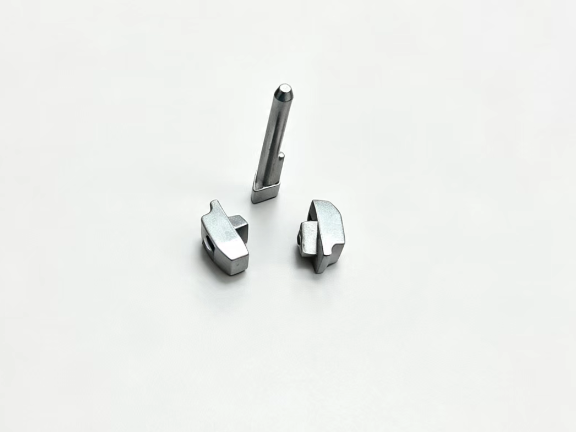
The positioning block decides where a knob has actually “arrived” — consistent detent angles, no wobble on the shaft, and a panel that sits flat. Zinc alloy die casting forms the positioning slot, the stop shoulder and the mounting posts in a single shot, with no secondary milling; critical mating surfaces are machined after casting, so batch-to-batch angular consistency comes from the tool and the gauges, not from hand fitting.
Typical Applications
Knob bases and travel limiters on mixing consoles, amplifiers, effect units and instrument panels, working with the potentiometer or encoder underneath to set the feel and the end stop of volume, tone and selector knobs. The same structure serves compact control panels and push-button bases that need a fixed detent angle.
Manufacturing Capability
Zinc alloy die casting forms the positioning slots and stop shoulders in the mold in one shot; critical features such as the shaft bore and mounting posts are machined after casting to hold concentricity and angular accuracy, with first-article gauge checks before mass production. Audio parts are the most sensitive to hum, current noise and pop — these blocks are given a conductive coating so the interference has a path away from the circuit, with adhesion verified by cross-hatch testing. Visible parts can also be plated (nickel, chrome, imitation gold), painted or brushed to match the knob finish.
Why Xiuhui Precision
The difficulty here is not the casting itself, but making every batch feel identical at the end stop — slot angle, shoulder flatness and bore concentricity. Miss any of them slightly and the assembled unit ends up with a knob that sits a degree off or wobbles on the shaft. Twenty-plus years in both zinc and aluminum, small parts like this run against gauges and first-article checks, and we review whether the structure can be cast in one shot before quoting.