
Kitchen Equipment Components
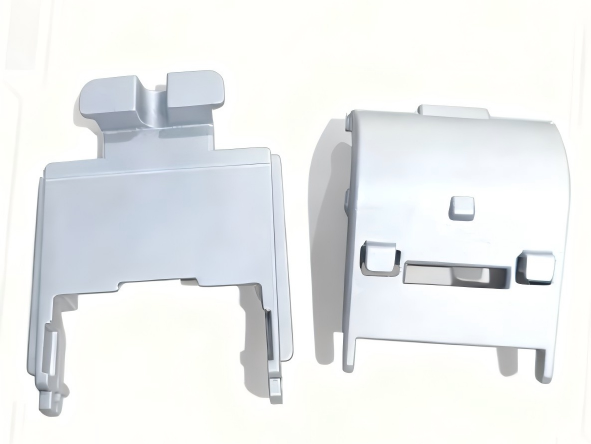
Material: Aluminum Alloy Die Casting
Application: Home Appliances
Secondary Process: Deburring, Polishing, Drilling
Surface Treatment: Powder Coating
Lead Time: 15-25 days
Product Advantages: 1. Complex, assembly-critical parts die cast in high-strength ADC12 — several welded or bolted pieces become one casting, cutting part count, assembly time and the risk of joints working loose over years of use. 2. Electrophoresis or powder coating reaches the internal cavities, so grease wipes off — commercial kitchens are washed with detergent, hot water and steam every day. Corners and inner walls are where coating is usually missed and where rust starts, so we deburr and polish before coating and inspect edges and cavities afterwards. 3. Aluminium brings the weight of the whole unit down without giving up structural strength — brackets, handles and mounting plates are load-bearing, so weight saving and strength have to be balanced rather than traded against each other. 4. Holes drilled and tapped in one fixture pass, repeatable batch to batch — the same fixture keeps hole positions consistent, so your line needs no shims or re-alignment. In volume structural parts, this is the single most important thing.
Overview
Kitchen equipment components are structural before they are cosmetic: brackets, handles, knobs and mounting plates that carry a load and get cleaned every day. Aluminum keeps the weight down, and powder coating gives a finish that survives heat, steam and detergent far better than paint. Holes and mounting faces are drilled after casting so the part bolts on without shimming.
Typical Applications
Commercial kitchen equipment, catering appliances, cabinet fittings and machine guards. The same casting and coating route is used for a support arm and for an anodized electronic enclosure, so brackets and covers can be ordered from one supplier.
Manufacturing Capability
Covers and brackets are cast on aluminum machines from 250 to 350 tonnes, with walls around 1.2 mm where the part allows. Drilling and tapping are done on fixtures built for the part, so hole positions repeat between batches. Powder coating is applied after deburring and polishing, and the coated surface is checked for coverage on edges and inside the mounting holes.
Why Work With Xiuhui
Xiuhui has been die casting zinc and aluminum in Dongguan for over 20 years. Equipment parts come back for the same reasons: a bracket that does not sit flat, a hole that has drifted, or a coating that flakes at an edge. Machining after casting and a fixed coating specification are what keep those three from happening.